

Our goal to
Make a better environment
is in our daily achievements
Managing - inactivating, organic waste and animal by-products
GAIOANAPTYXI ENERGIAKI S.A. was established in 2014, its main purposes being:






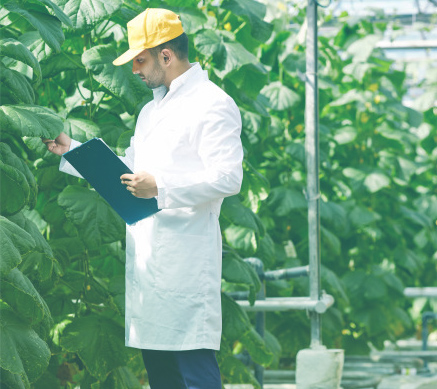
Our vision
-
Renewable energy sources
Our vision is one of sustainable growth, and we believe it is necessary for the economy to turn to the production of energy from renewable sources.
-
Environmental benefit
The environmental benefit from the production of energy from RES is due to the reduction of emissions, which Greece is obligated to limit.
-
Waste management
The environment is facing serious pollution problems, directly or indirectly caused by human activity. One of these problems is the continuously increasing production of organic waste.
-
Environmental Protection
Practices such as uncontrolled disposal of waste in the natural environment are unacceptable. Our purpose is to develop methods that aim to protect the environment, reduce pollution, and utilise waste.
BIOGAS / ANAEROBIC DIGESTION
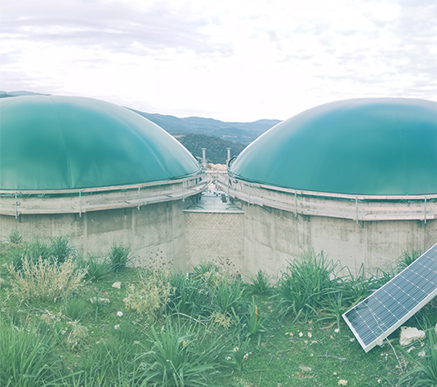
The production of biogas from the anaerobic digestion (AD) of livestock waste, as well as from a very broad range of organic waste, transforms these substrates into renewable energy and produces a natural fertilizer. AD is a microbiological organic matter decomposition process in the absence of oxygen, which is common in many natural environments, and which is currently used for the production of biogas. Τhis process takes place in airtight tanks that operate as reactors, called digesters. A broad range of microorganisms is involved in the anaerobic process that produces two main products: biogas and digested residue. Digestate is an excellent fertiliser containing all nutrients and micronutrients necessary for modern farming, including nitrogen, phosphorus and potassium.
Anaerobic digestion is a biological process during which various anaerobic microorganisms deconstruct organic matter, producing mainly methane (CH4), which is the most reduced form of carbon, and carbon dioxide (CO2), which is its most oxidised form. Specifically, the biogas produced from anaerobic digestion is a mixture, typically composed of 45-70% CH4, 25-55% CO2, and traces of hydrogen (Η2), nitrogen (Ν2), hydrocarbons, steam, and hydrogen sulphide (H2S).
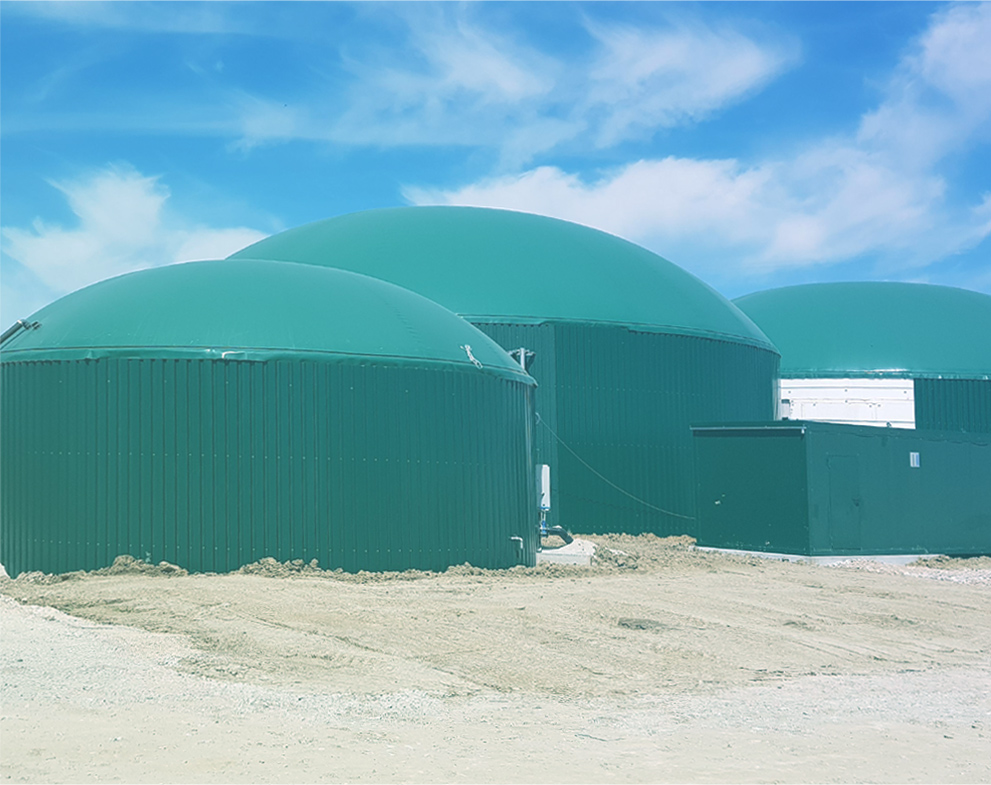
ENVIRONMENTAL BENEFITS OF A BIOGAS UNIT:
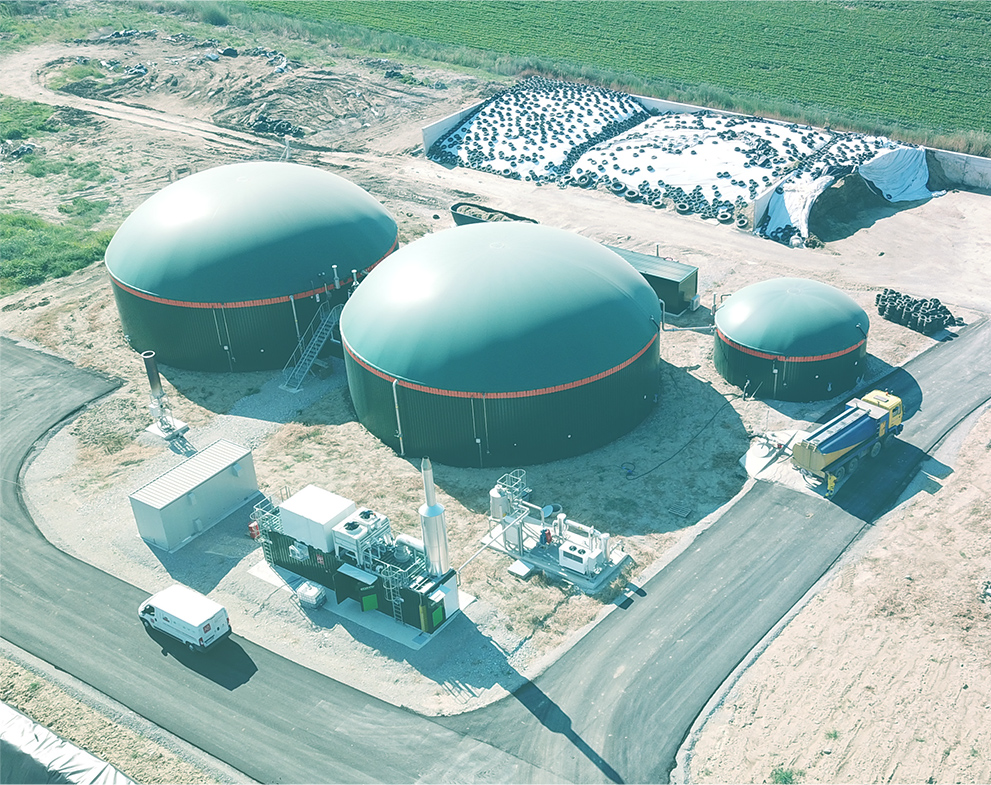
-
Reduction of greenhouse gas emissions
-
Reduction of smells and visual pollution
-
Utilisation of waste from poultry – livestock production units, olive mills, cheese dairies, and slaughterhouses; reduction of their pollutant load and excessive disposal of waste in the soil and water.
-
Production of digestate with excellent fertilising properties, offering an alternative to agriculture, landscaping and horticulture. It is efficient and environmentally friendly. Organic fertilisers can compete with mineral fertilisers in several catagories
-
Closed nutrient cycle
-
Flexibility in raw material use
-
Veterinary safety

